Two good traditions, built for different priorities.
Both can be good windows. They grew up under different conditions. Across much of Central and Northern Europe, energy has been expensive and building codes strict for decades, so triple glazing, deep multi-chamber frames and perimeter locking became the normal way to build a window. In the US, energy was cheaper and building was optimized for speed and cost, so the double-pane vinyl slider or single-hung became the standard. Today there are excellent windows on both sides. The differences are in what's standard, how the window seals and how it's serviced.
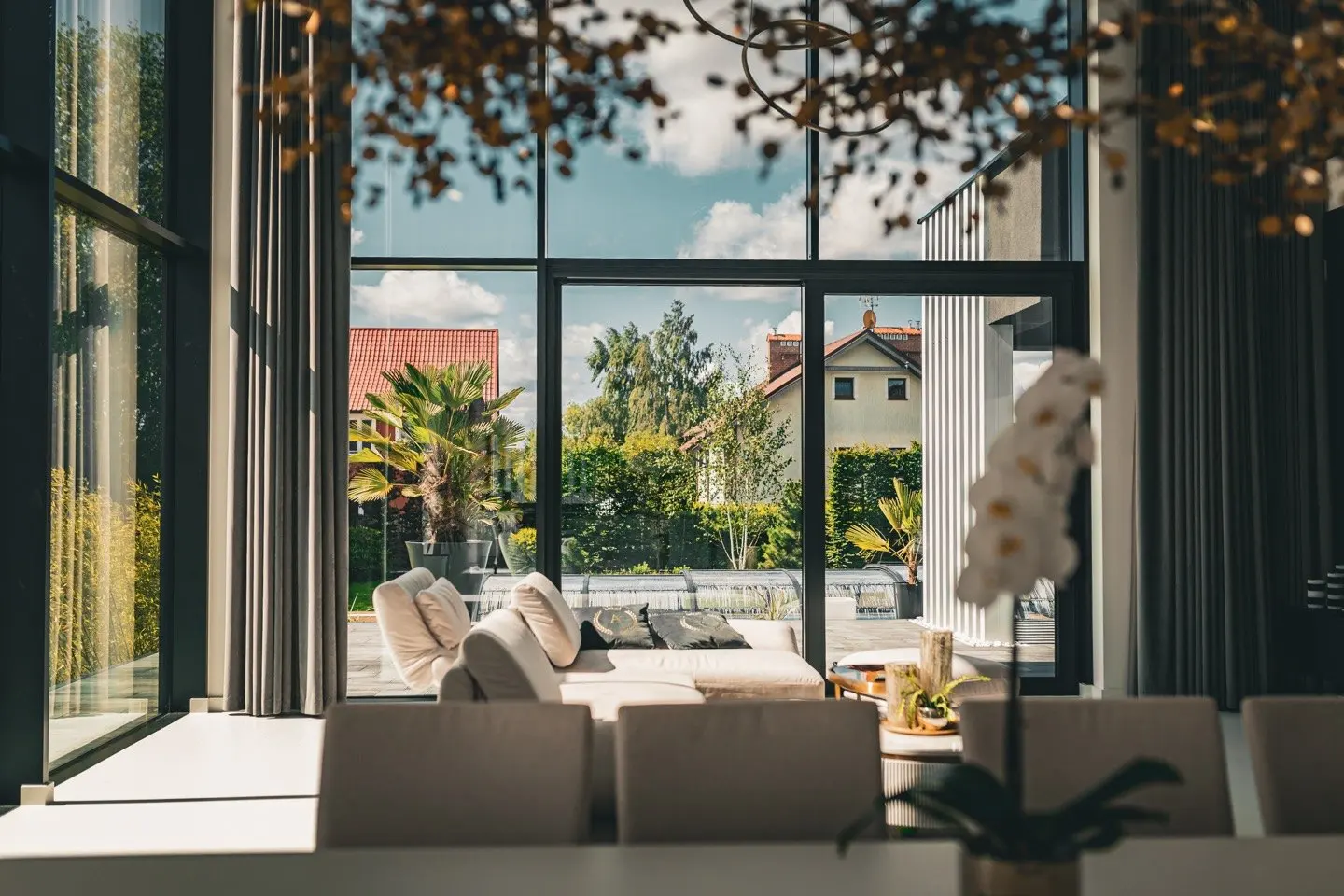
How do European windows open differently?
The inward-opening sash is what makes the rest possible: it can close onto compression gaskets on all four sides, lock at many points, and be cleaned from inside. How tilt-and-turn windows work →
Why the frame matters as much as the glass
The frame is a large share of a window's area and much of its heat loss. European uPVC profiles typically have five to seven internal chambers and steel reinforcement; aluminum systems use wide polyamide thermal breaks, often with foam or aerogel inserts; wood systems use laminated timber. A deeper, stiffer frame stays warmer on the inside and holds a heavy sash square for decades.
Compression seals and perimeter locking
A sliding window has to let its panels slide past each other, so it relies on brush or fin seals at the meeting points. A tilt-and-turn sash closes like a refrigerator door: two or three gaskets, pressed evenly by locking cams all around. That's why European windows tend to do well in wind-driven rain and drafts, and why they resist being pried open.
It's not that American windows are bad. It's that a European window treats sealing and service as the main job.
Side by side
| Typical American double-pane | Typical American triple-pane | European triple-pane tilt-and-turn | |
|---|---|---|---|
| Glass | 2 panes, 1 gas space | 3 panes, 2 gas spaces | 3 panes, 2 gas spaces; laminated acoustic options |
| Frame | Vinyl, aluminum, fiberglass or wood; chamber count varies | Varies by brand | Multi-chamber uPVC with steel, thermally broken aluminum, or laminated wood |
| Seals | Weatherstrip; brush seals on sliders | Weatherstrip | 2–3 compression gaskets |
| Locking | 1–2 cam locks typical | 1–2 cam locks typical | Multi-point, around the sash, one handle |
| Opening | Slides, single/double-hung, crank-out casement | Same | Tilts in, turns in |
| Cleaning | Outside glass can be hard to reach on upper floors | Same | Both sides from inside |
| Sizing | Standard catalog sizes; custom available | Same | No standard catalog sizes: every window built to order for the opening, no custom-size upcharge |
| Service | Varies; many parts brand-specific | Varies | Adjustable hardware; common hardware standards |
| U-factor (lower is better) | Varies; check the NFRC label | Varies; check the NFRC label | Our systems from 0.14–0.16 in the best configuration; your quote lists each window |
"Typical" columns describe common market products, not any brand; many American windows exceed these. Our values are best-case product data; your quote lists the rated value per window. Compare windows by their NFRC label where available.
Why it matters in the Pacific Northwest
- Long, damp winters. Triple glazing keeps the inner pane warmer, which reduces condensation and the cold feeling near the glass.
- Wind-driven rain. Compression gaskets and perimeter locking keep it out, provided the installation is flashed correctly.
- Noise. Heavy glass, laminated options and multiple seals help near arterials, rail and flight paths. Our systems are rated up to about 45–48 dB with acoustic glass on the European Rw scale (not directly comparable to US STC).
- Ventilation. Tilt lets you air out a bathroom or bedroom in light rain, which helps control indoor humidity.
- Older houses. Built-to-measure windows fit openings that aren't standard or square. There's no custom-size upcharge, because every window is made to order.
- Energy code. High-performance windows make it easier to meet the Washington State Energy Code on new builds and additions.
The honest downsides
Inward-opening sashes need clear space inside. Screens mount outside. Lead times are longer, about 3–4 months, because every window is built to order and shipped by sea freight. Some hardware is unfamiliar to US handymen, which is one reason we offer repairs and maintenance for any European window.
Common questions
Are European windows better than American windows?
Are European windows NFRC rated?
Do tilt-and-turn windows have screens?
Will they meet code?
Is there a warranty?
Do custom sizes cost extra?
How long does it take?
Can you service European windows I already have?
Want to see one up close?
- Climate: Seattle is in IECC climate zone 4C (marine), per US DOE/IECC climate zone maps.
- No US market U-factor ranges are published.