The handle positions
Stand in front of a closed tilt-and-turn window and the handle points down. That's locked. From there:
- Turn it 90° to the side (horizontal): the sash is free to swing open on its side hinges, into the room. Use it for airing a room quickly, for cleaning the outside glass, or as an emergency exit.
- Turn it another 90° to point up: with the sash closed, it now opens at the top. The sash pivots on its bottom hinges and leans in a few inches, held by an arm at the top corner.
- Back down: closed and locked.
Some windows have a fourth, in-between position called night vent or micro-vent. The sash moves out just a few millimeters, enough for a trickle of air while the window still looks closed.
Rule of thumb: always close the sash before changing between turn and tilt.
What's inside the sash
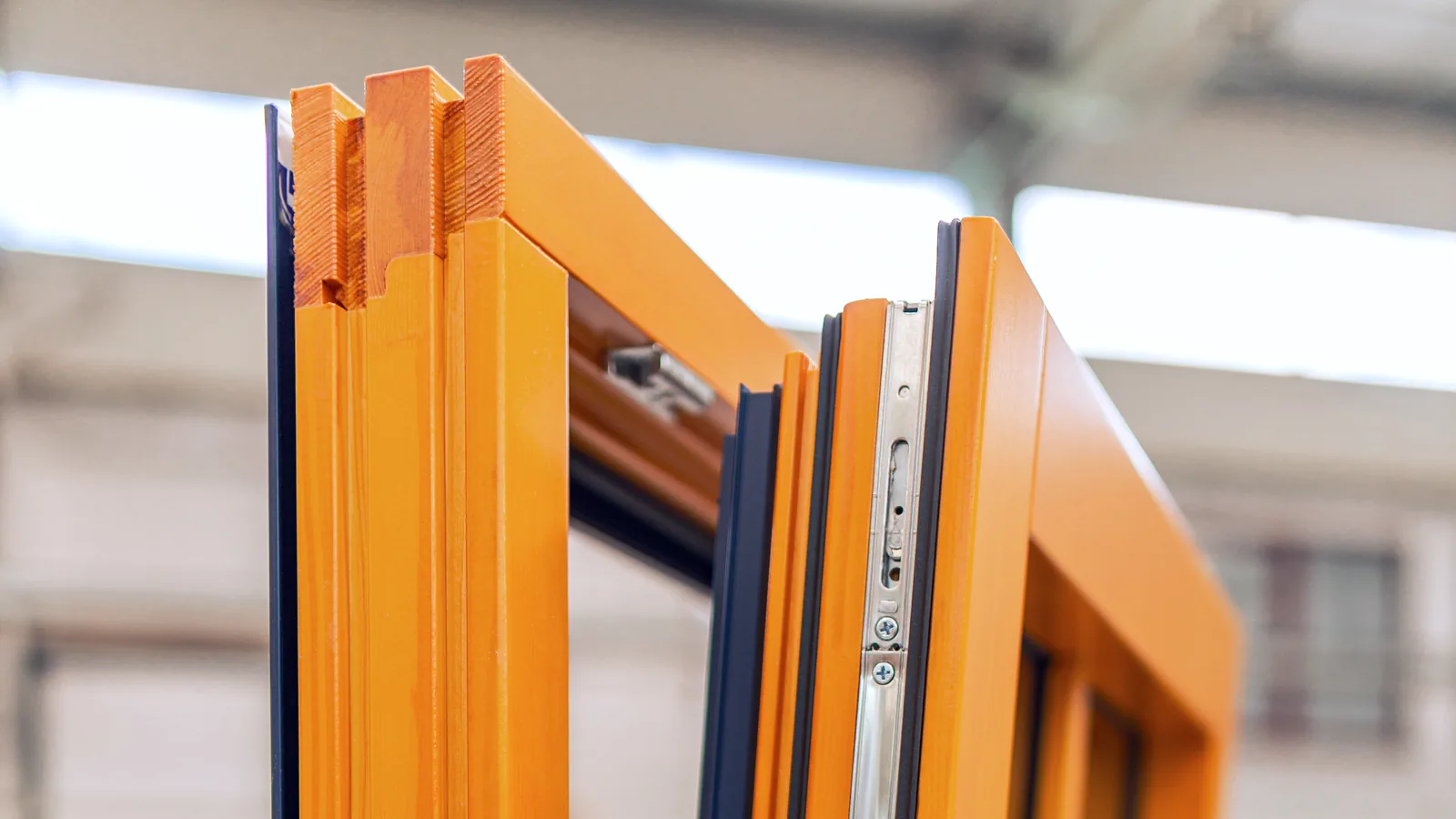
Open the window in turn and look at the sash edge. You'll see a metal strip running around it. That's the hardware, mounted in a standard groove. When you turn the handle, a gearbox behind it pushes connecting rods around the sash. The rods move:
- Locking cams at the sides, top and bottom that hook behind keeps on the frame. More cams means more locking points; larger windows have more.
- The corner drive at the top hinge side, which switches the top of the sash between being hinged (for turn) and being released onto the stay arm (for tilt).
- The bottom corner hinge, which carries most of the weight and acts as the pivot in both modes.
A misoperation lock near the handle stops you turning the handle while the sash is open, so it can't end up both tilted and turned at once. When it's worn or bypassed, that's exactly what happens; see how to fix a hanging sash.
Why a tilt-and-turn window seals so well
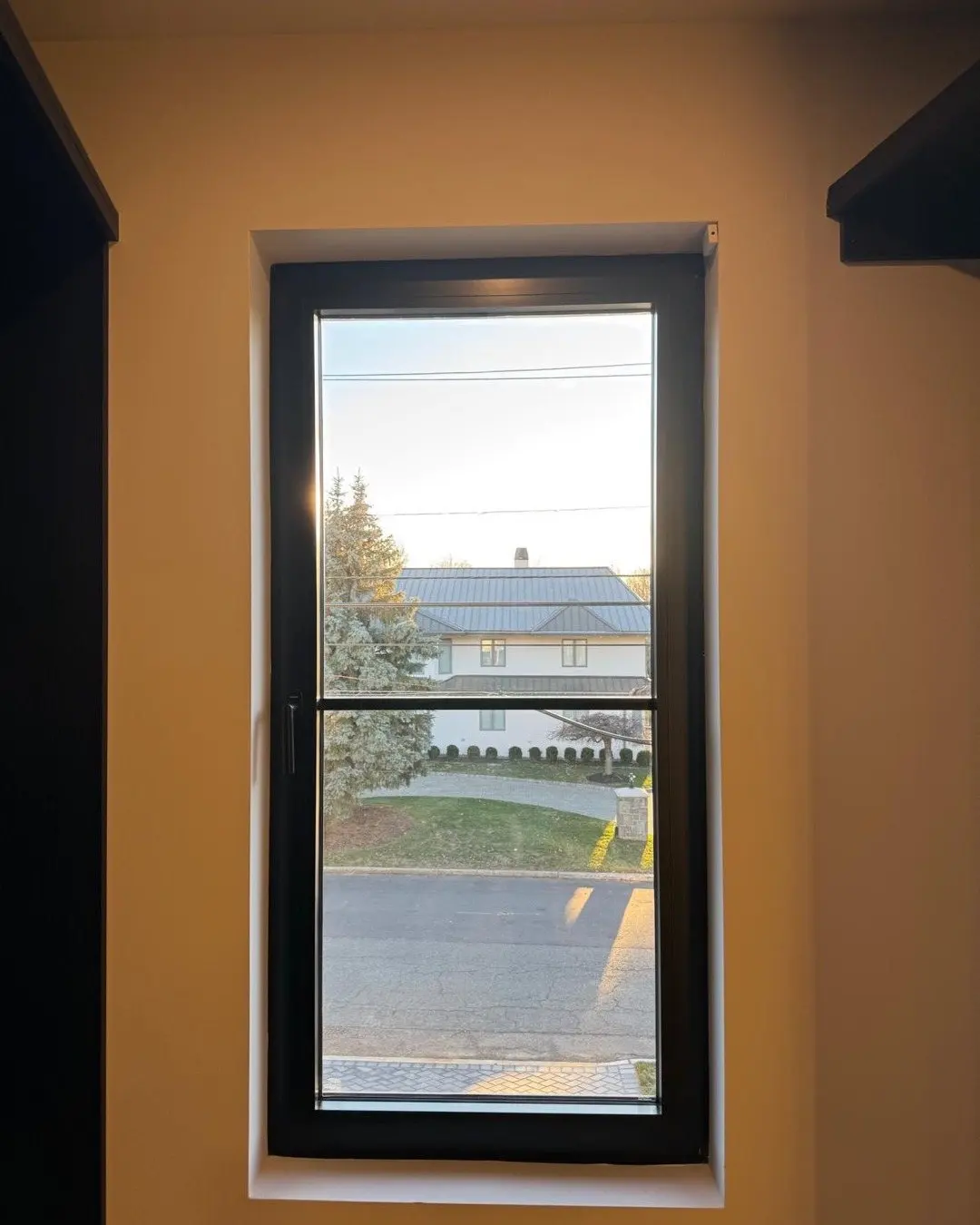
When the handle goes down, every locking cam pulls the sash into the frame at the same time. The sash presses on two or three rubber gaskets around its whole perimeter, like a refrigerator door. Compare that with a sliding window, which has to leave room for panels to slide past each other and relies on brush seals at the meeting rail. In wind-driven rain, an evenly compressed gasket is far harder for water and air to get past.
The cams are usually eccentric (off-center), so turning one changes how hard it pulls the sash in. That's how an installer sets the seal tight enough to stop drafts and loose enough for an easy handle.
Tilt: ventilation that works in Seattle weather
Tilt is the position most people end up using every day. The opening faces up and in, so light rain runs down the outside of the glass rather than in. The sash stays locked at the bottom and sides, so it's much harder to open from outside than a window propped open. It's ideal for bathrooms after a shower, kitchens while cooking, and bedrooms overnight: steady air exchange that helps control indoor humidity in a damp climate.
Safety and security
- Ground floor: use lockable handles, so the window can't be turned open from inside by a child or opened if glass is broken.
- Children: tilt-before-turn hardware lets the window tilt normally but only turn with a key. Restrictors limit how far a sash opens. Both fit many systems; ask which yours takes.
- Wind: don't leave a sash turned open in gusty weather; a slamming sash can damage the top hinge.
- Egress: a turned sash opens almost the full width of the window, which helps bedroom windows meet egress requirements.
Living with tilt-and-turn windows
- Furniture and blinds: the sash opens into the room, so keep the hinge side and the sill clear, and choose blinds mounted on the sash or high on the frame.
- Screens: they go outside, because the sash opens inward. We offer fixed, flex and pleated screens.
- Care: a drop of oil on the moving parts once a year, clean gaskets, clear drainage slots. Every few years, or after the first year in a new house, an adjustment. See Window maintenance.
Callout (unattributed): "Close the sash before you change from turn to tilt. That one habit prevents a lot of service calls."
Can a tilt-and-turn window be left tilted in the rain?
Why won't my window tilt?
Are tilt-and-turn windows good for older houses?
Who can repair tilt-and-turn windows in Seattle?
Related: Tilt-and-turn windows for Seattle homes · European vs. American windows