Classic face, European seal.
U-factor from 0.16 · uPVC, aluminum, wood, wood-aluminum
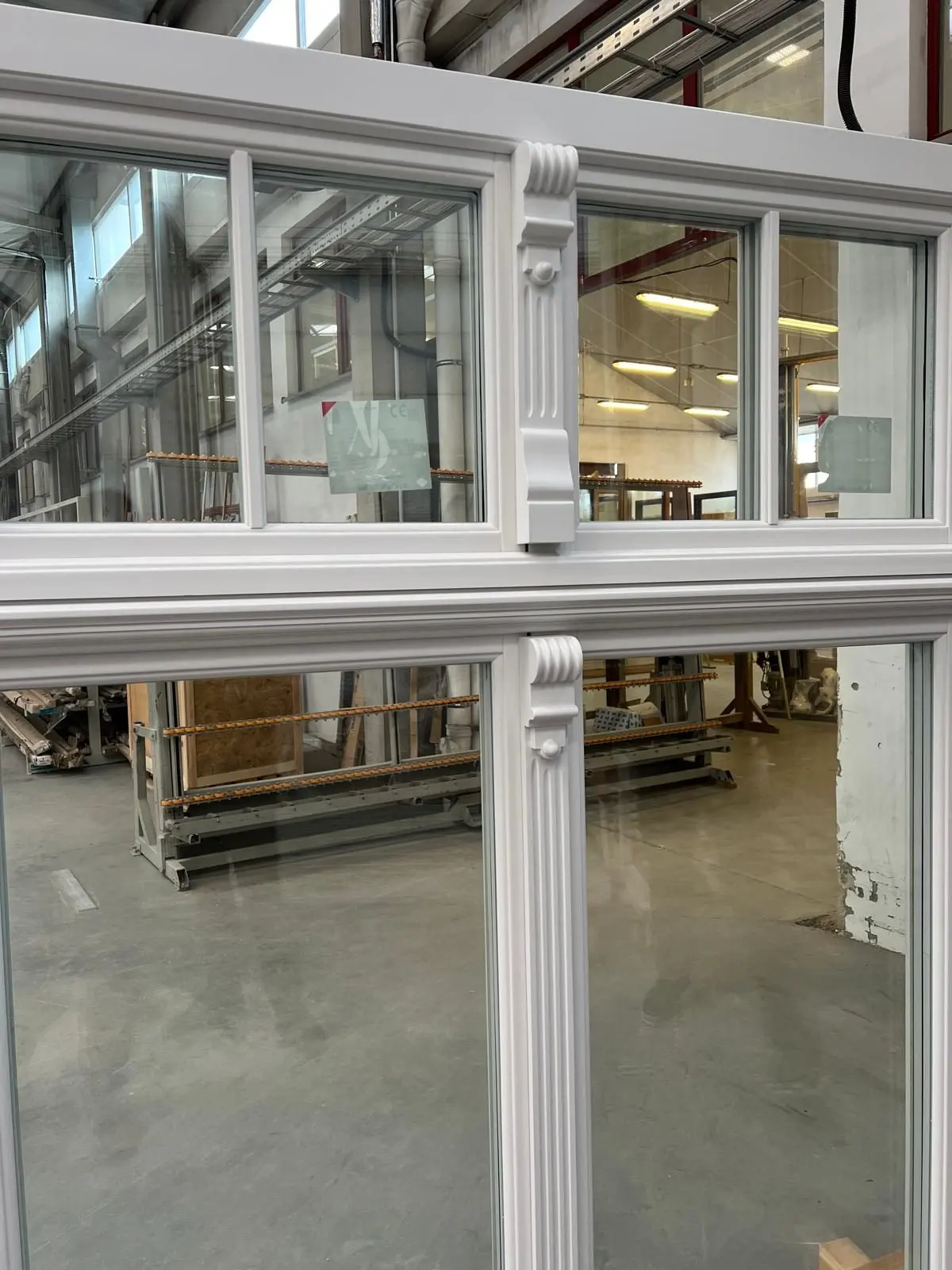
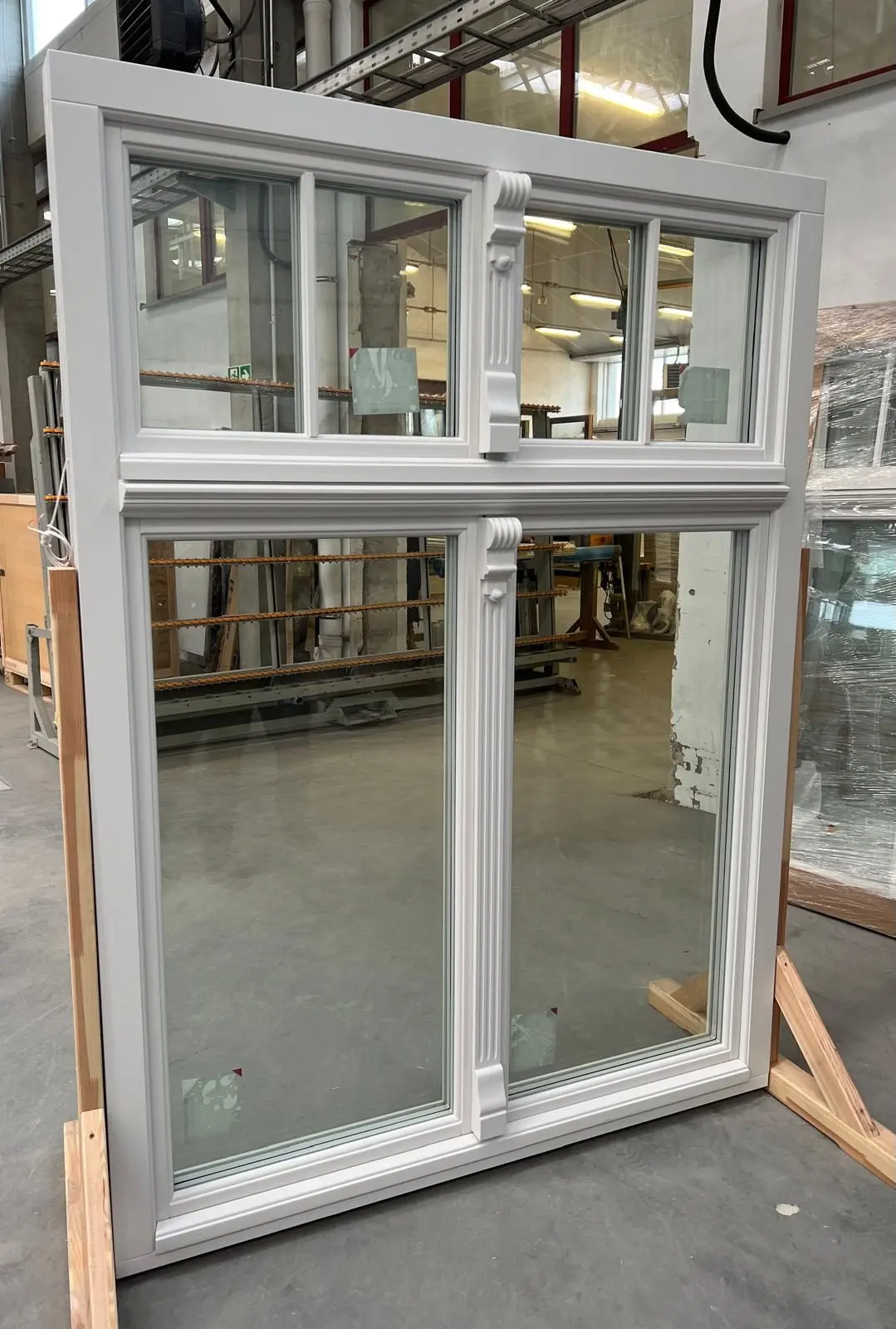
Seattle is full of houses whose character comes from their double-hung windows: Craftsman bungalows, Foursquares, Tudors, Colonials. Real double-hungs slide, and sliding sashes are hard to seal. A simulated double-hung gives you the same face from the street, with an upper and lower sash look, meeting rail and muntins, but the lower part opens as a tilt-and-turn (or side-hung) and the upper part is fixed. It seals like a European window because it is one.
How it fools the eye
Custom sash profiles create the offset of an upper and lower sash. A horizontal bar reads as the meeting rail. Muntins can be applied to the glass, set between the panes, or true divided lites. From the sidewalk, it reads as a double-hung.
Which material?
- uPVC with woodgrain or painted-look colors, for budget-sensitive whole-house work.
- Aluminum for slimmer profiles and dark colors.
- Wood for historic interiors, and wood-aluminum (now available) to keep the weather off the wood.
Your neighbors see a double-hung. You get a window that doesn't rattle.
Historic districts
If your house is in a Seattle landmark district or a designated landmark, window changes usually need review. Bring photos and the profile drawings to the board early. We can provide drawings for the review.
| Spec | Simulated double-hung |
|---|---|
| U-factor | from 0.16 Btu/h·ft²·°F |
| SHGC | 0.17–0.42 |
| Sound | up to 47 dB (European Rw, not STC) |
| NFRC rating | Ask us for current status for your project |
| Lead time | 3–4 months; made to order and shipped by sea freight |
| Warranty | 20-year limited manufacturer warranty; 3-year installation warranty (warranty terms) |
| Materials | uPVC, aluminum, wood, wood-aluminum |
| Operation | lower sash tilt-and-turn or side-hung; upper fixed |
| Muntins | applied, between-glass, true divided lite |
| Glass | double or triple, warm-edge spacers |
| Security | RC1 / RC2 hardware options |
| Details | concealed hinges, hidden drainage |
| Finishes | RAL powder coat, anodized, woodgrain foils, wood stains/paints |
Why choose it: keeps the historic look · tilt ventilation · much better seal than sliding sashes.
Trade-offs: it opens inward, not by sliding · the upper sash doesn't open · true divided lites cost more and add frame.
Can the top sash open?
Will it pass in a historic district?
Is it more expensive than a regular tilt-and-turn?
Keeping the character of an older house?
Send a photo of the street side. We'll show you a matching profile.